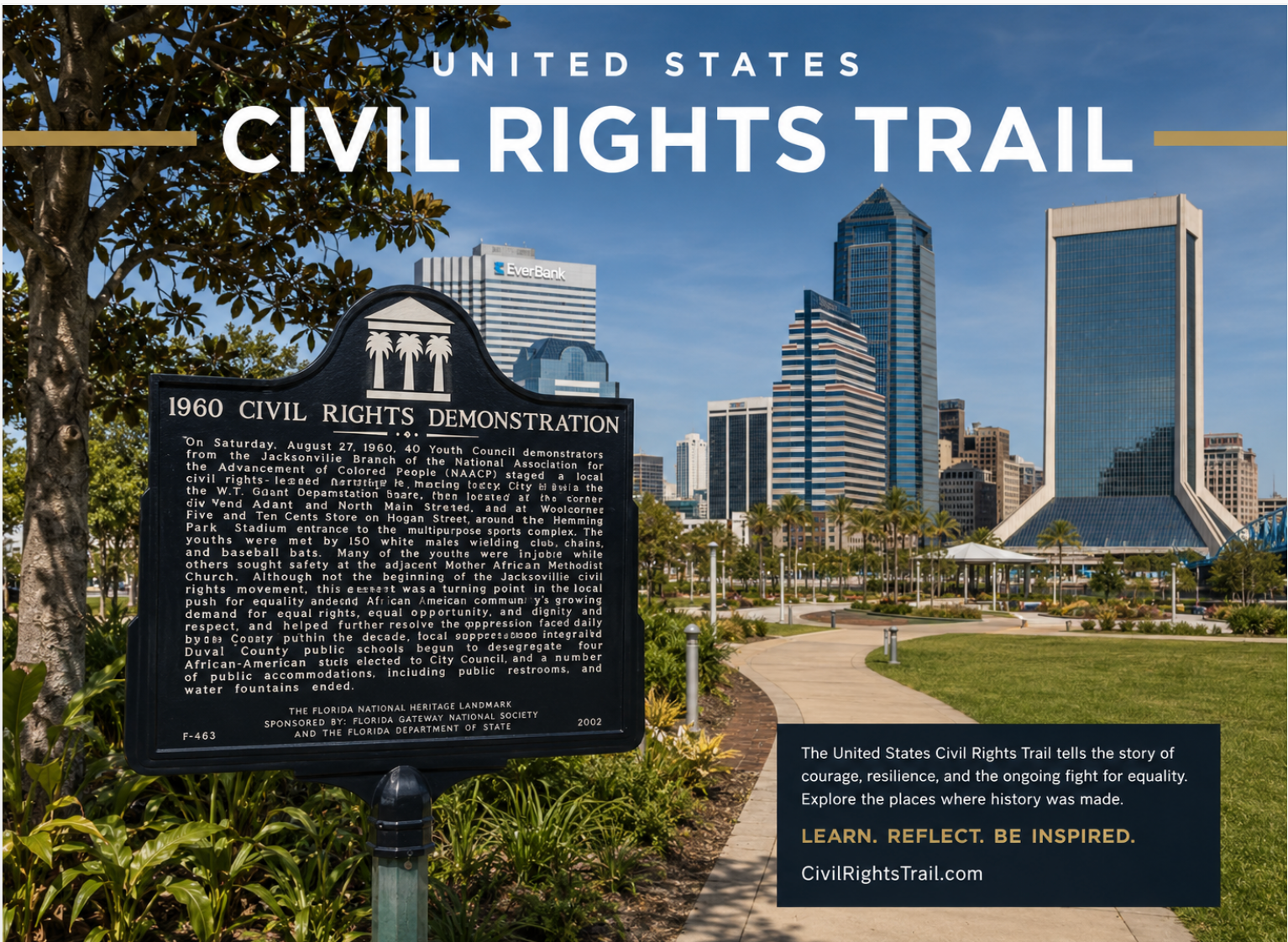
Jacksonville was officially added to the U.S. Civil Rights Trail on February 25, 2026
Discover the profound stories, courageous leaders, and historic landmarks that played a pivotal role in the fight for equality and justice. With the unveiling of its first marker at Mt. Ararat Baptist Church.
The trail, featuring 40 planned markers, highlights crucial local sites, including Ax Handle Saturday and 1960s lunch-counter protests.
Our nonprofit commitment
Preserving history with purpose.
The Northeast Florida Black Heritage Trail is dedicated to connecting communities with the stories, places, and people who shaped our region.
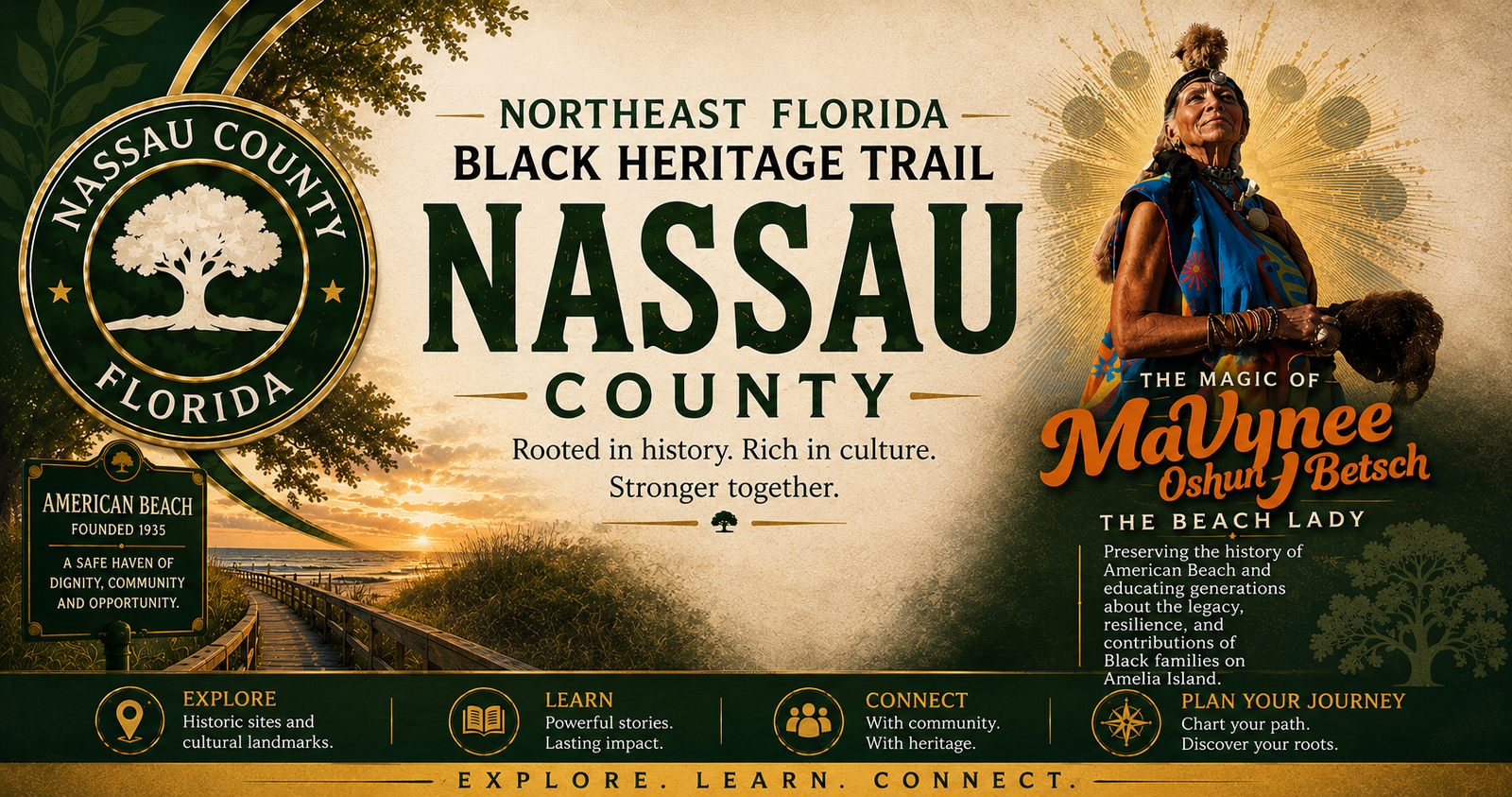
Nassau County
From the historic American Beach community to Fernandina's maritime heritage, Nassau County tells the story of Black resilience and entrepreneurship along Florida's Atlantic coast.
Preserves the history of American Beach and celebrates the legacy of A.L. Lewis and the vibrant resort community he created.
The original section of the cemetery is thought to have been established in 1798 but the oldest identifiable grave, of French Soldier Peter Bouissou de Nicar, dates from 1813.
In 1858, the first Bishop of Florida laid the cornerstone of the first St. Peters Church in Fernandina on the southeast corner of what is today St. Peters Cemetery.
The Slave Route: Resistance, Liberty, Heritage addresses the history of the slave trade and slavery through the prism of intercultural dialogue, a culture of peace and reconciliation.
The Gullah Geechee Corridor celebrates, preserves, and shares the important contributions made to American culture and history by African Americans known as Gullah Geechee people.

Duval County
Jacksonville's rich Black history spans from the Great Migration to the modern Civil Rights era, with landmarks that shaped the cultural and political landscape of Northeast Florida.
Built in 1929, this cultural landmark preserves and celebrates African American contributions to music, theater, and visual arts in Northeast Florida.
Founded in 1866 by the African Methodist Episcopal (AME) Church, Edward Waters University (EWU) is the oldest Historically Black College or University (HBCU) in Florida and the state's first independent institution of higher learning.
Established in 1838, this church played a pivotal role in the Civil Rights Movement and continues to serve the community.
Walking trail through the historic LaVilla neighborhood, once known as the "Harlem of the South" for its vibrant jazz and blues scene.
Originally Stanton High School, founded in 1868 as the first public school for Black students in Florida, now a top-ranked magnet school.
Mt. Ararat Baptist Church in Jacksonville stands as a pillar of local civil rights history. On March 19, 1961, Dr. Martin Luther King Jr. delivered his "This is a Great Time to Be Alive" sermon at the church to support nonviolent resistance.
A deeply historic 1852 burial ground located at East Union Street and Cemetery Street in Downtown Jacksonville is a resting place honoring the service and sacrifice of African American soldiers, including valiant members of the US Colored Troops.
Established in 1904 by Eartha M.M. White, this mission has provided social services to Jacksonville's underserved communities for over a century.
The historic birthplace of James Weldon Johnson and J. Rosamond Johnson, honoring their enduring legacy in music, literature, and the civil rights movement.
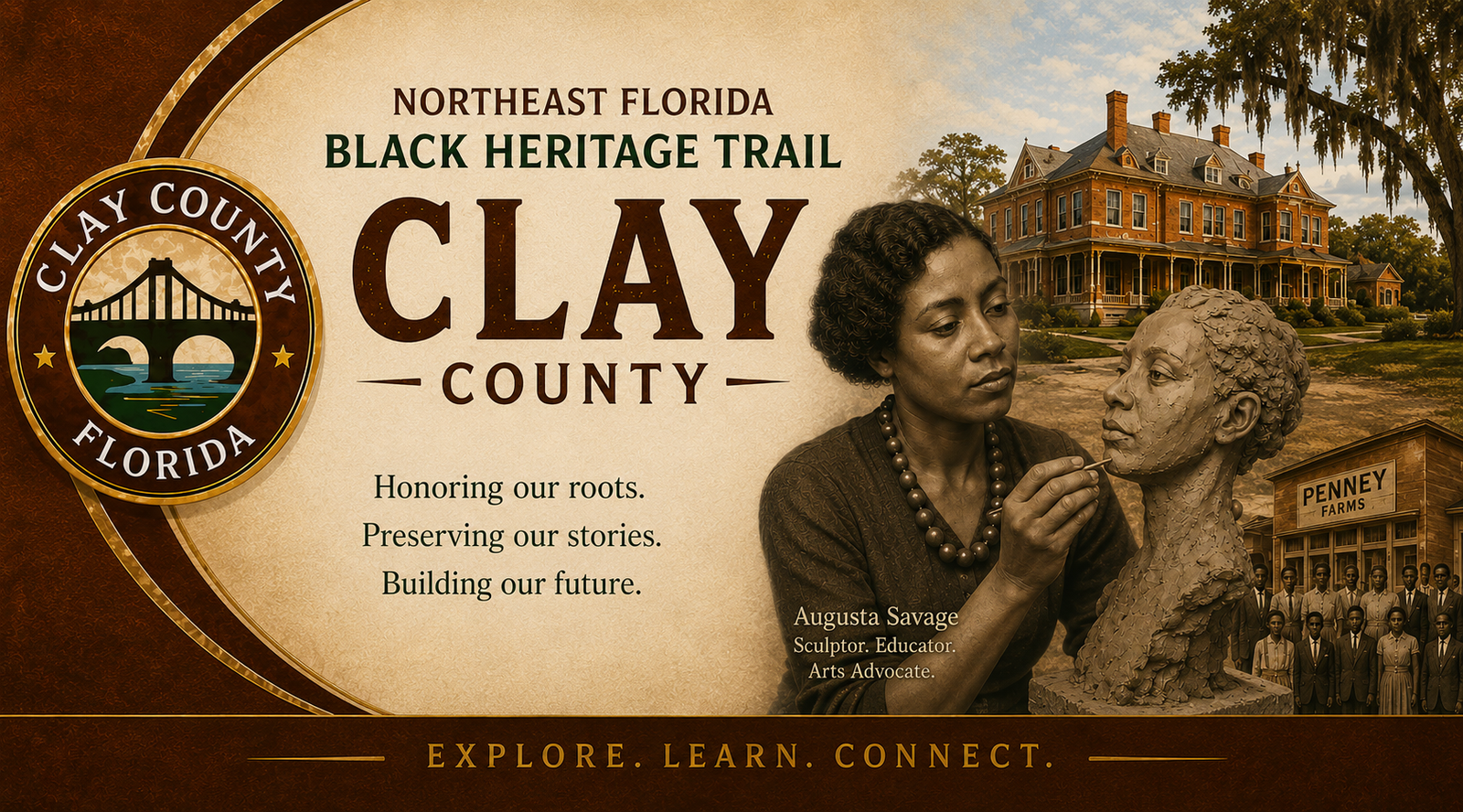
Clay County
Clay County's heritage sites reflect the agricultural roots and community-building efforts of African Americans who shaped the region's development through education and faith.
Dedicated to making a positive impact on the lives of youth and families in Green Cove Springs, FL. Our mission is to promote programs that inspire healthy, productive, and creative lives, with a special emphasis on the underserved members of our community.
Historic neighborhood that developed in the late 1800s, home to Black families who built thriving businesses and community institutions.
Mt. Zion AME Church located in Green Cove Springs. The church was founded in 1873.
Built in 1908 (with some historical records citing 1903). It was constructed by the local Black community, who donated the land and their own labor to build the one-room wooden schoolhouse for $176.
(formerly the T.C. Miller Elementary School) is a historic site. Built during segregation, it served as a primary educational facility for African American students.
Founded in 1922 by J.C. Penney department store pioneer, this experimental suburban farming village was officially incorporated by the state of Florida in 1927, representing a unique vision of community development and agricultural innovation.
St. Johns County
Home to the nation's oldest continuously occupied settlement, St. Johns County preserves centuries of African American heritage from the Spanish colonial era through the Civil Rights Movement.
A comprehensive walking trail and educational initiative celebrating the freedom struggle and civil rights achievements of St. Augustine's African American community.
Barbara Vickers' legacy as a humanitarian and activist endures, serving as a perpetual source of community inspiration. She initiated the St. Augustine Foot Soldiers Remembrance project, unveiling a monument in 2011 in the Plaza de la Constitución.
First free Black settlement in North America, established in 1738 by formerly enslaved Africans who fought for Spanish Florida.
Established in 1866, this neighborhood became the heart of St. Augustine's Black community and a center of civil rights activism in the 1960s.
Built in 1925, this school served Black students during segregation and stands as a testament to the community's commitment to education.
Founded in 1898, this church has been a spiritual anchor for St. Augustine's Black Catholic community for over a century.
Historic beachfront community that welcomed Black families during segregation, fostering a vibrant summer resort culture. The region holds 450+ years of African heritage, from the first free Black settlement in North America to pivotal 1964 Civil Rights activism.
Haitian officer buried in an unmarked grave who saved St. Augustine, Florida.

Putnam County
Palatka and surrounding areas in Putnam County preserve important chapters of Black history, from Reconstruction-era churches to mid-century civil rights activism.
Established in 1865, this church served as a meeting place for civil rights organizers and continues to anchor the community today.
A significant historical year for this entry is 1767. Local Marker is near East Palatka, Florida, in Putnam County.
The small town of Palatka, Florida is about 60 miles south of Jacksonville, 45 miles east of Gainesville, and 29 miles southwest of St. Augustine. It's the home of St. Johns River State College and the Florida School of the Arts.
Historic neighborhood where Black entrepreneurs established businesses and built a self-sufficient community in the early 1900s.
The name of Medal of Honor recipient Robert H. Jenkins Jr. will not be lost to history, despite the closing of the Putnam County middle school named in his honor.
Flagler County
Flagler County's heritage sites document the contributions of African Americans to the region's growth, from early settlements to modern community institutions.
Built in 1927 as a Rosenwald School, this building educated Black students and stands as a monument to educational perseverance.
Founded in 1893, this church has been a spiritual and social center for Flagler County's Black community for over 130 years.
Historic beachfront area where Black families established homes and businesses in the early 20th century.
Built in 1915, this small chapel served as a house of worship and community meeting space for rural Black families.
Know a site we should add?
Help us build a comprehensive directory of Black historic places in Northeast Florida. If you know of a significant site that should be included, we'd love to hear from you.
Preserving the Past. Connecting the Present. Inspiring the Future.